
 +84 777113211
 English
  Vietnamese
FRESH AND COOL AIR
The Key to Your Business’s Sustainable Growth


+84 777113211

sales@iteco.vn

11A, Hong Ha Street, Tan Son Hoa ward, HCMC


Industrial Ventilation Systems
Our ventilation solutions remove heat, dust, and pollutants to ensure a safe, well-ventilated, and efficient industrial manufacturing environment.
 Provides continuous fresh air supply to workshops and production zones.
- Removes operation-generated heat, dust, odors, and vapors.
- Helps improve working conditions and boosts labor productivity.
- Protects machinery, equipment, and goods from high heat & humidity.
 Download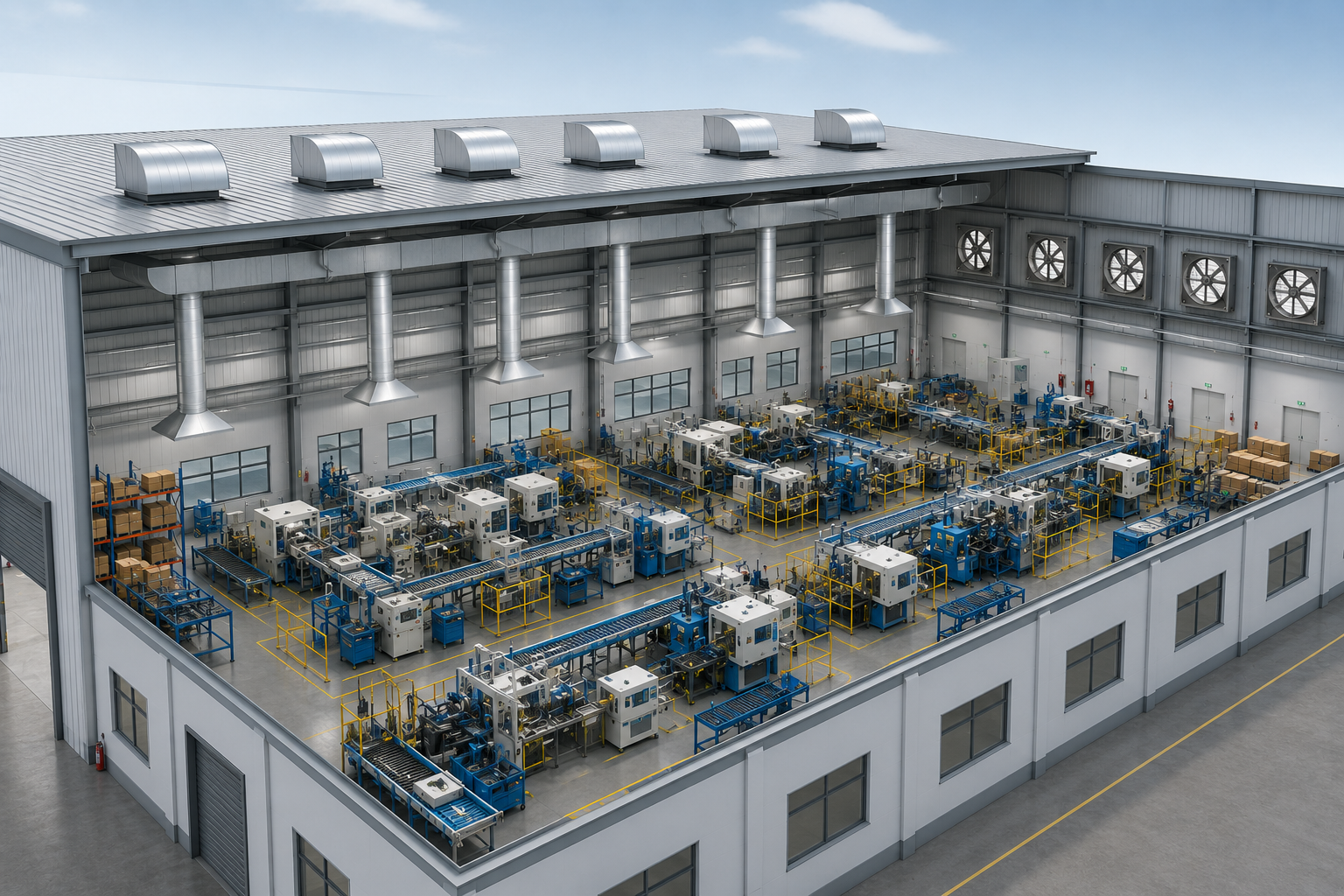
Ventilation Principles
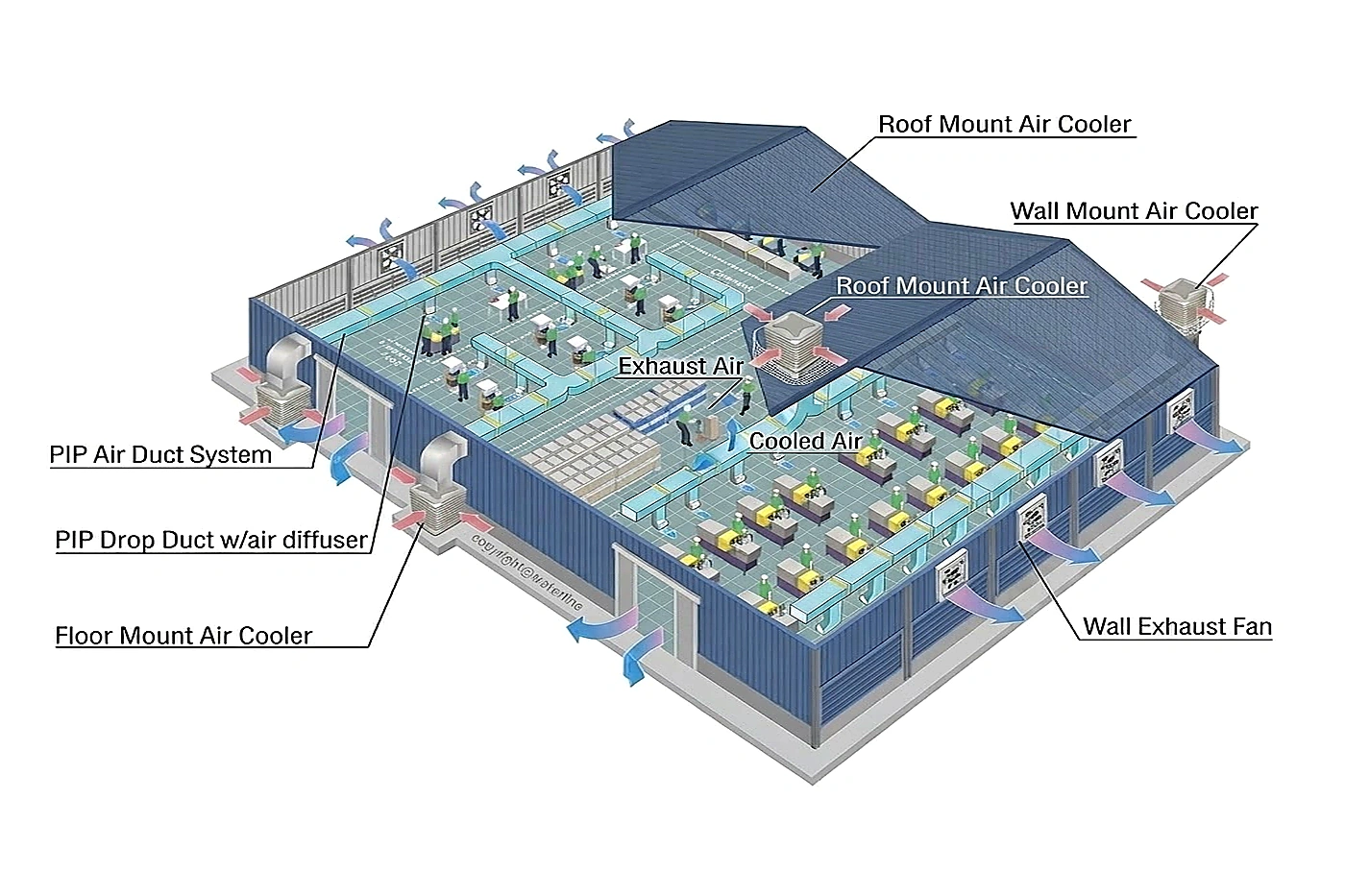
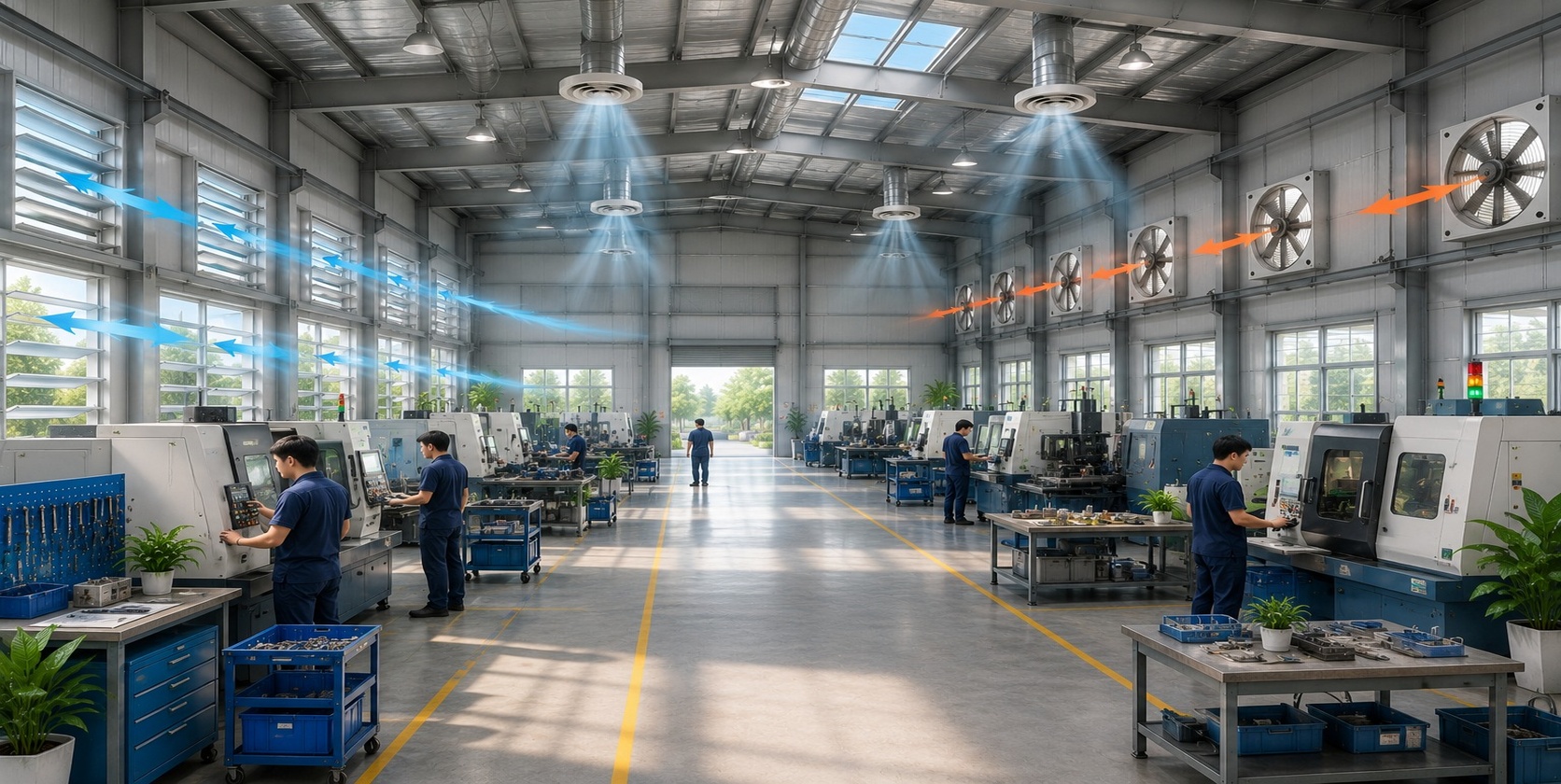
Industrial ventilation systems operate by exchanging air between the indoor and outdoor environments. Hot air, dust, or emissions generated during production are exhausted outdoors via exhaust fans. Meanwhile, fresh outdoor air is supplied through air intake louvers or fresh air supply fans. This continuous air replacement reduces heat accumulation, improves indoor air quality, and creates a comfortable environment for workers.
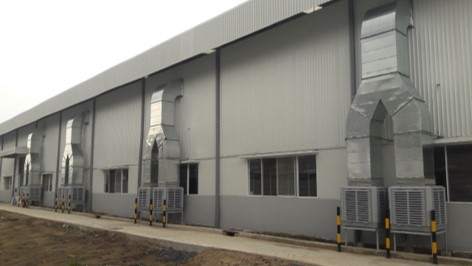
Depending on facility structure and operational needs, systems can be designed as natural ventilation, mechanical ventilation, or integrated with evaporative cooling solutions.
Types of Industrial Ventilation Systems
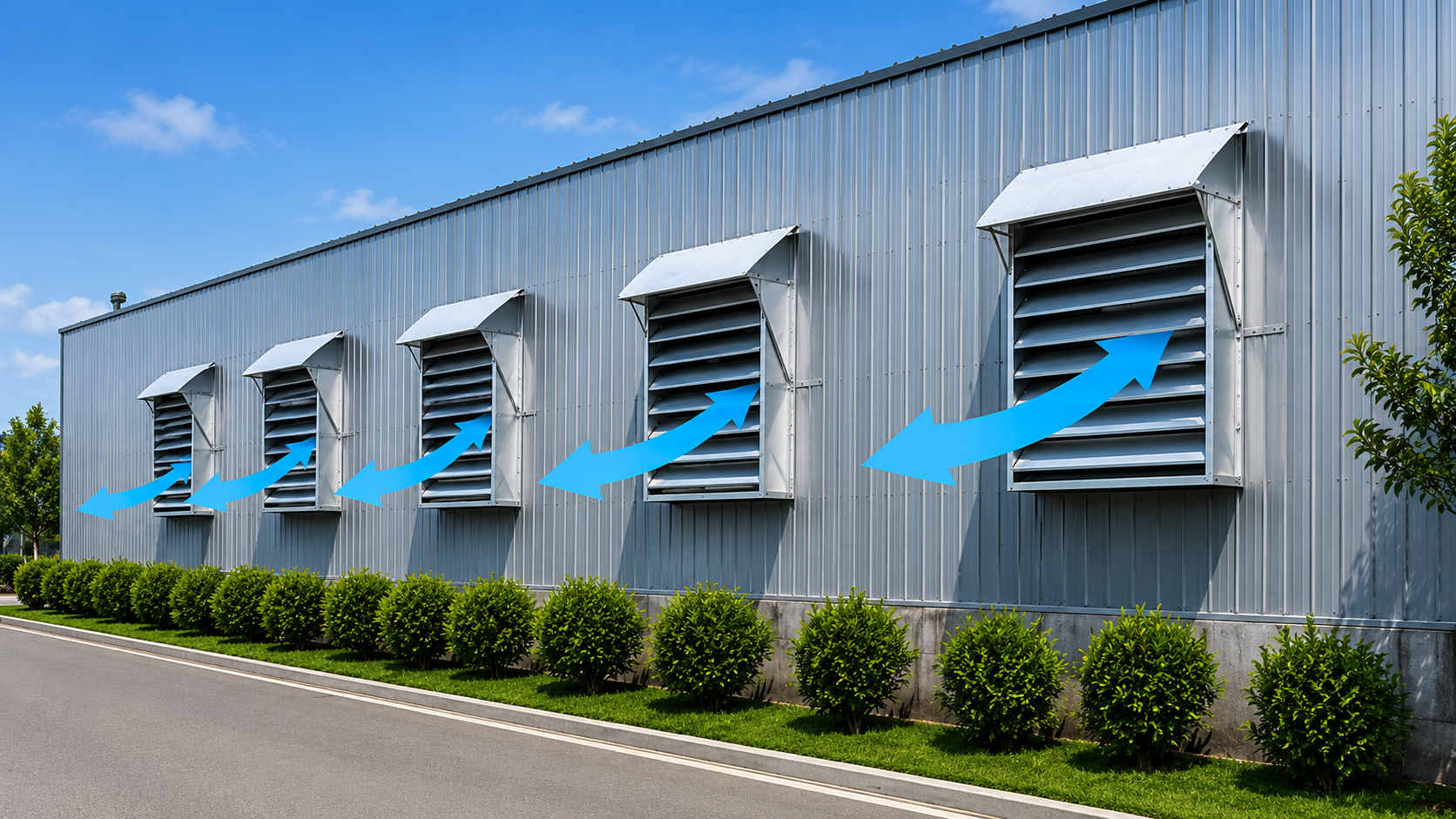
Natural Ventilation
- • Uses air louvers, fresh air inlets, and roof monitors
- • Zero electrical power consumption during operation
- • Suitable for facilities with low heat load.
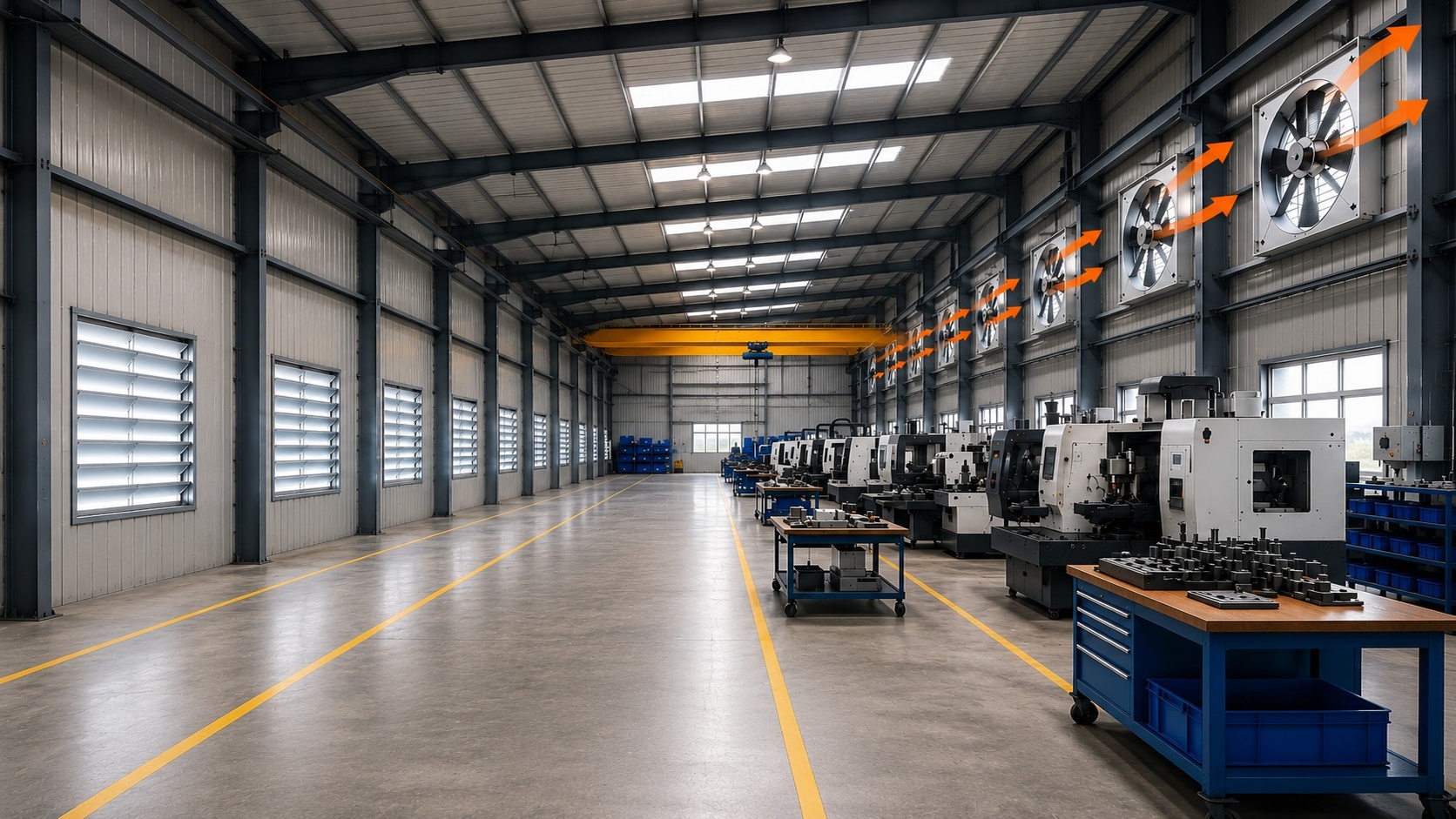
Mechanical Supply & Exhaust Ventilation
- • Supplies continuous fresh air into the workshop
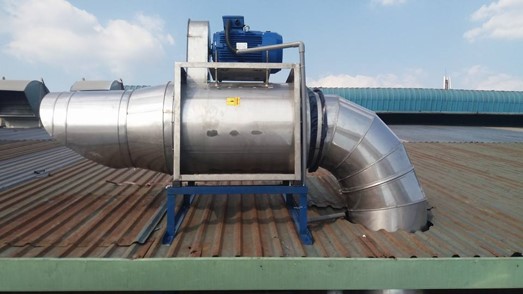
- • Exhausts hot air and emissions outdoors
- • Creates effective air circulation throughout plant
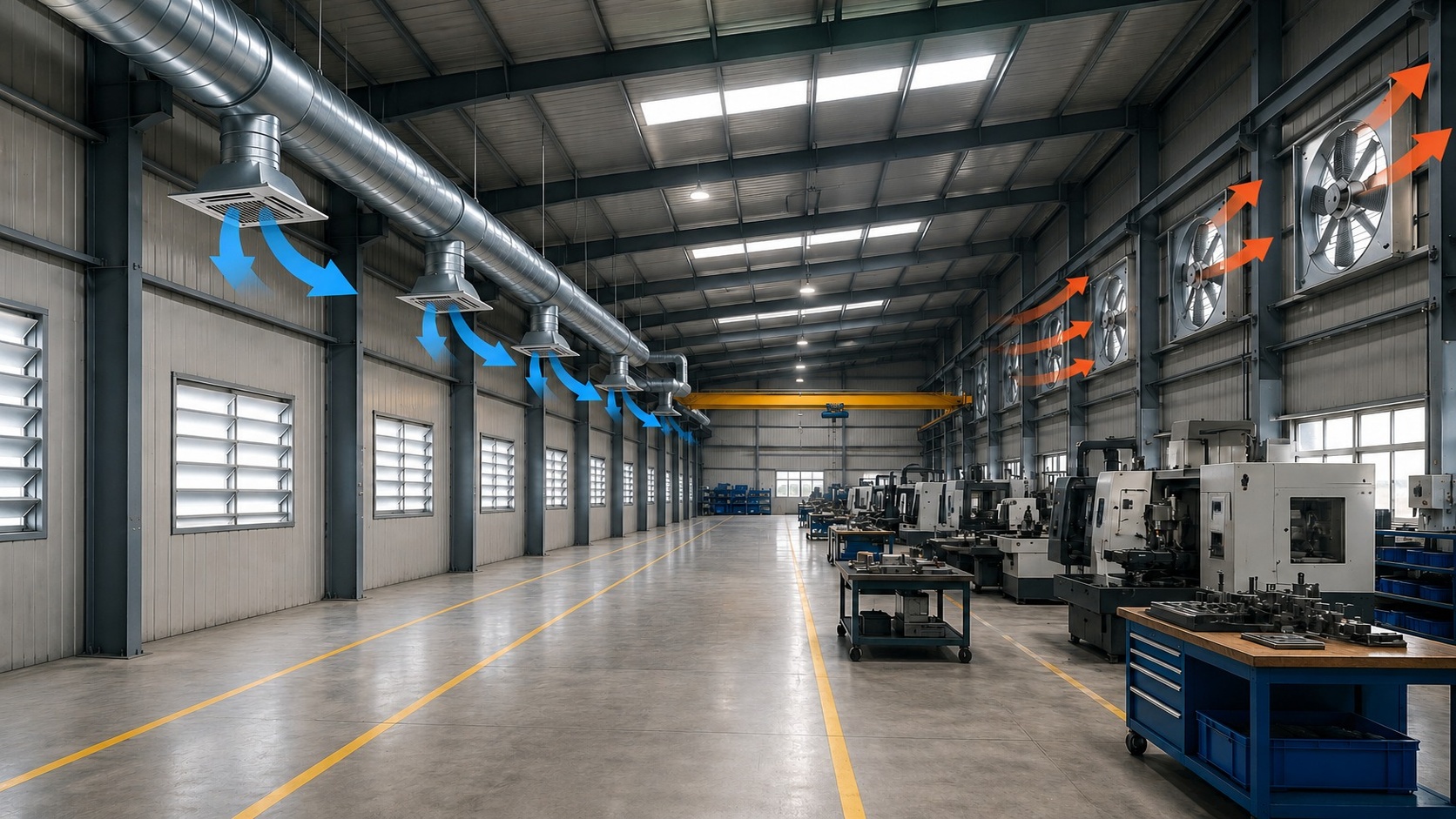
Ducted Air Ventilation Systems
- • Ensures uniform indoor air distribution
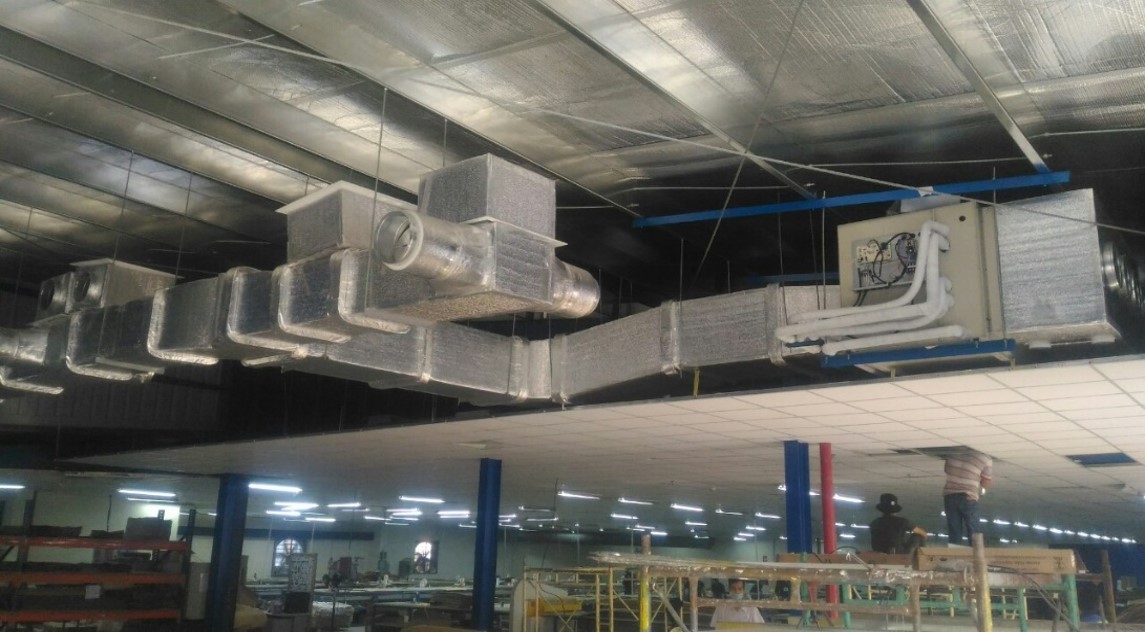
- • Suitable for large-scale manufacturing plants
- • Allows precise control of airflow rate
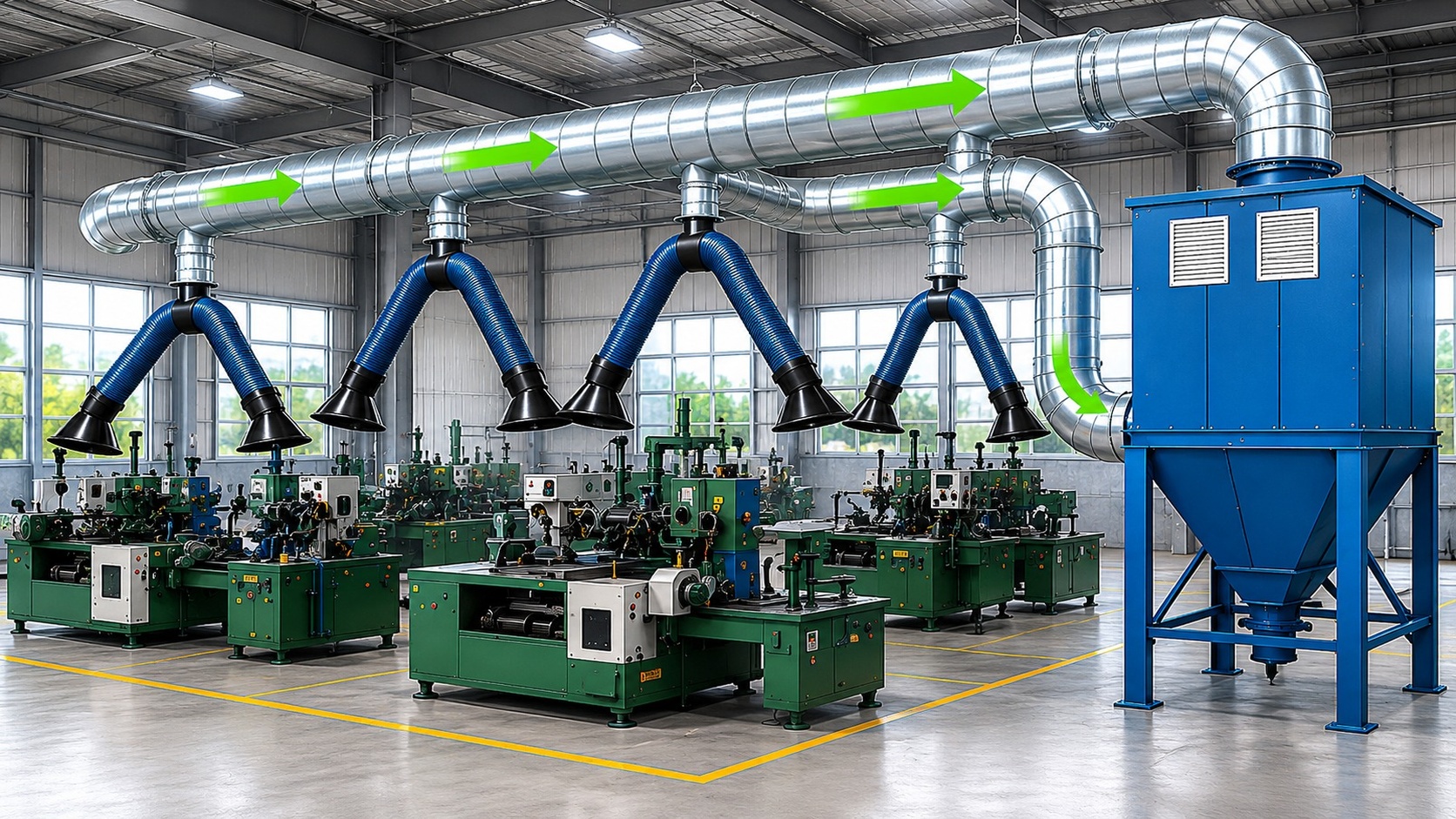
Local Exhaust Ventilation Systems
- • Collection dust right at the source of origin
- • Extracts welding fumes, oil mist, and toxic gases
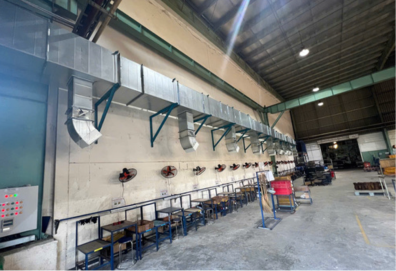
- • Ensures a cleaner and safer working environment
Advantages of Industrial Ventilation
Ventilation systems maintain stable indoor air quality in factories by continuously supplying fresh air while removing heat, dust, and odors generated during manufacturing.
This solution improves worker comfort, minimizes health risks, and creates optimal operating conditions for machinery and equipment.
Properly engineered ventilation systems optimize capital and operating costs while helping enterprises satisfy occupational safety and environmental regulations.
Reduce Heat Buildup
Improve Air Quality
Lower Operating Costs
Protect Worker Health
Wide range of industrial applications
Ventilation systems are widely used in multiple manufacturing industries to enhance workplace environments and boost operational efficiency.
Food & Beverage Processing Sector
Paper & Plastic Packaging Industry
Mold Industry
Automotive Manufacturing
Consumer Goods Sector
Textile Sector
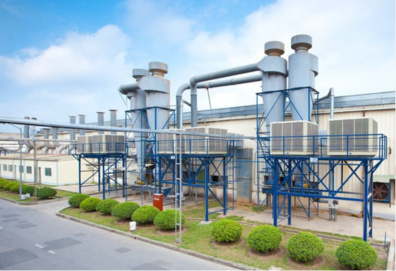

Clean Fresh Air
Supplies continuous fresh outdoor air to the workspace.

Temperature Control
Reduces heat buildup and improves indoor factory ventilation.

Boost Productivity
Comfortable work environments enhance labor performance.

Energy Efficiency
Optimizes operational costs compared to other cooling options.
